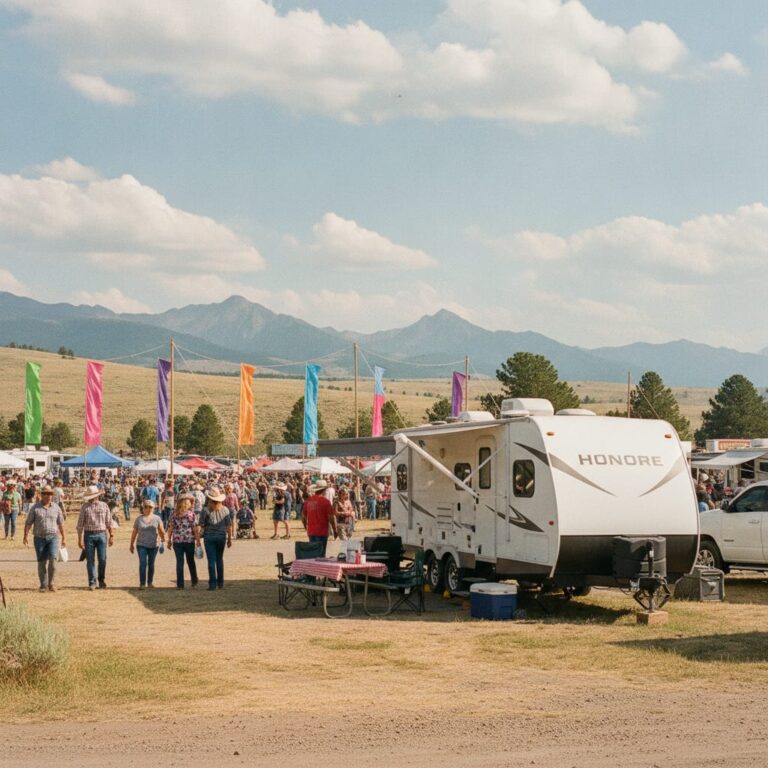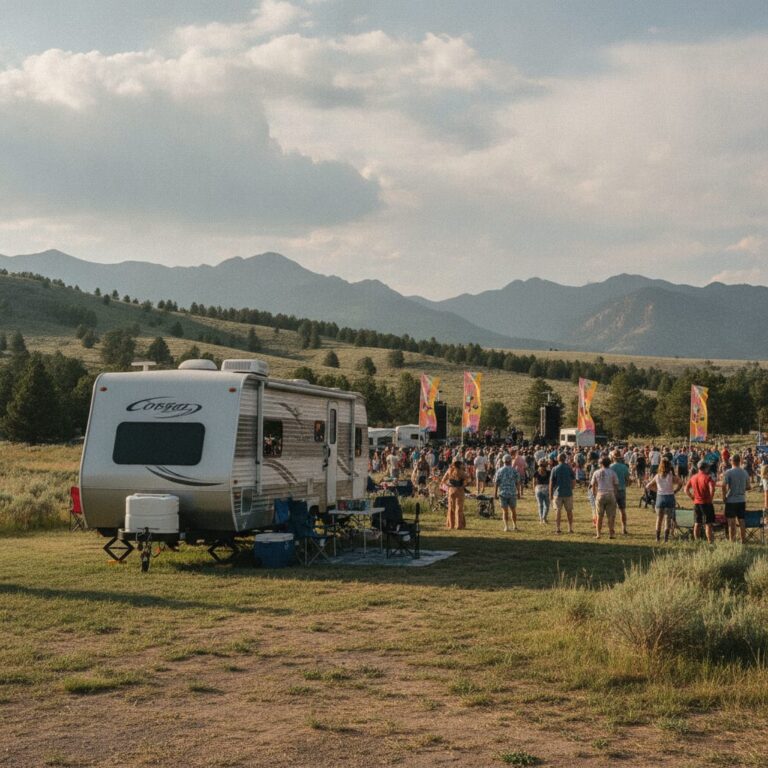
RV Rental Near Yellowstone National Park in Cody, WY
Every June, right around the time the East Entrance road opens back up after its spring snowpack, my phone starts ringing off the hook — and it’s always some version of the same conversation: “We want to do Yellowstone, we’ve never rented an RV before, and we’re flying into Cody. What do we do?” I love that call. After years of delivering rigs up the North Fork Highway (US-14/16/20) toward the East Gate, I know this corridor the way I know my own driveway, and I’m going to tell you exactly how a Yellowstone National Park RV rental actually works from Cody — no fluff, no guesswork.
The short version: Yellowstone itself does not have electrical hookup campsites in the traditional RV park sense. There are NPS campgrounds inside the park, but they’re first-come, first-served or reservation-only tent and dry-camping style loops that are tight, often generator-restricted during quiet hours, and not the kind of setup where I can deliver and fully set up a rig for you. So the play I recommend — and the one that genuinely works best — is to base your RV at a full-hookup campground right here in the Cody area, then day-trip into Yellowstone the way the locals do: up the North Fork, through the East Entrance, and into the Hayden Valley before the tour buses from the west side even finish their breakfast. You get the park. You get the comfort. You get the best of both.
Why the East Entrance Is the Right Way to See Yellowstone
I’m a little biased here, but I’ll stand behind it: approaching Yellowstone through the East Entrance on US-14/16/20 is one of the most underrated drives in the American West, and it’s the one I genuinely point people toward every single season. You leave Cody heading west, and within about twenty minutes you’re into Shoshone Canyon — tight walls, the dam, the reservoir glittering at eye level. Then the canyon opens into the North Fork of the Shoshone River valley, and you’re in Shoshone National Forest with the Absaroka Range rising up on both sides. Eagles fish the river. Bison graze the roadside meadows. Bears work the hillsides in early morning.
The East Entrance station is roughly 53 miles from downtown Cody — call it an hour’s drive in a tow vehicle or Class C at a comfortable pace, a little longer if you stop at the pullouts (and you will stop at the pullouts). Once you’re through the gate, you’re almost immediately into the Absaroka terrain that funnels down toward Yellowstone Lake, and from there it’s a short run up to the Hayden Valley — the single best place in the park to see large wildlife, in my honest opinion. The crowds thin out noticeably compared to the Old Faithful and Mammoth corridors, at least until midday.
One thing I always tell renters before they head up: US-14/16/20 between Cody and the East Entrance is a two-lane mountain highway with some curves and occasional wildlife crossings. It’s completely manageable in any rig I deliver, but it’s not an interstate. Give yourself time, don’t rush the curves, and pull over when the scenery grabs you — because it will.
Where I Set Up Your RV: The Best Base Campgrounds Near Yellowstone in Cody
This is where my job gets specific, because not every campground around here works equally well for every rig. I deliver and set up your RV before you arrive, so I’ve got an honest read on site length, pull-through availability, shade, and how easily I can get a larger trailer in and out without drama.
Yellowstone Park KOA (Cody) is my go-to recommendation for first-timers. The pull-through sites are long enough for most of what I run, the hookups are solid, and the location on the east side of Cody puts you pointed right toward the North Fork Highway without navigating through town in the morning. Families tend to love the amenities, and the staff there know how to help guests who’ve never woken up in an RV before.
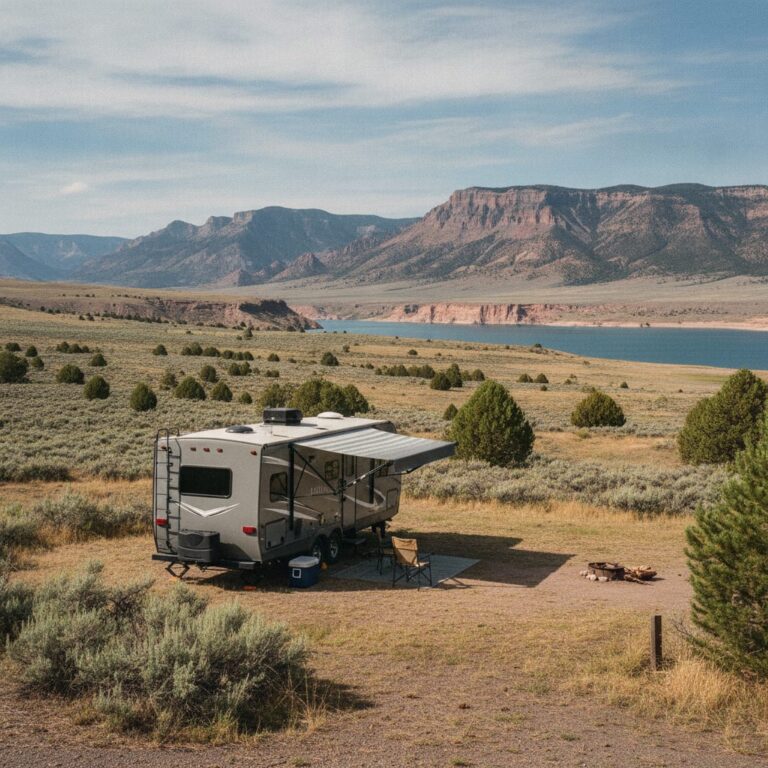
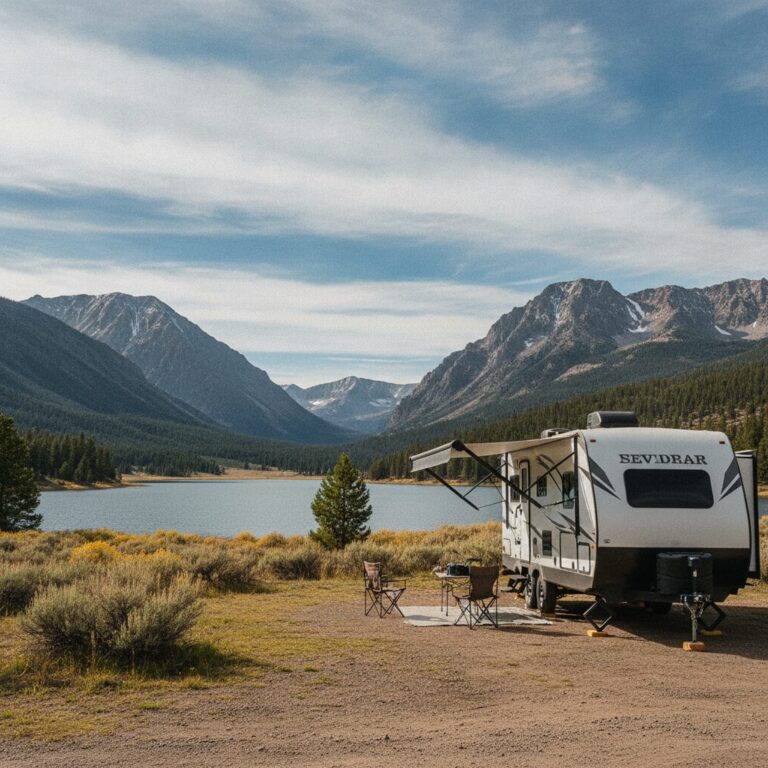
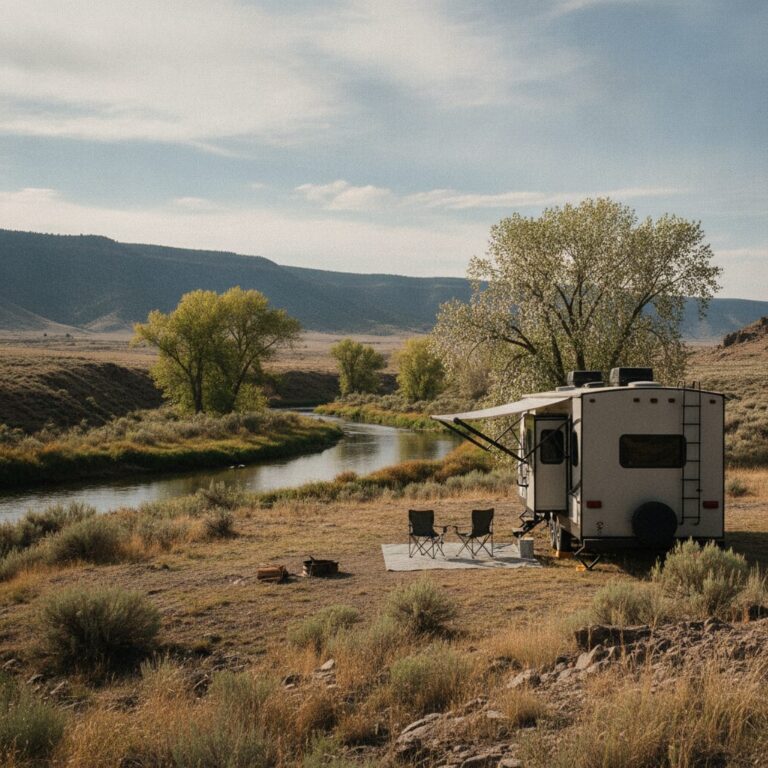
Buffalo Bill State Park Campground — North Fork is the one I steer people toward when they want to feel truly immersed. You’re right on the Buffalo Bill Reservoir, the Absarokas are your backdrop, and on a clear morning with coffee in hand before the drive into Yellowstone, there’s nowhere better. Sites run a bit shorter out there, so I pay attention to rig size when I make that match — bigger trailers and larger Class Cs need a conversation before I book that site.
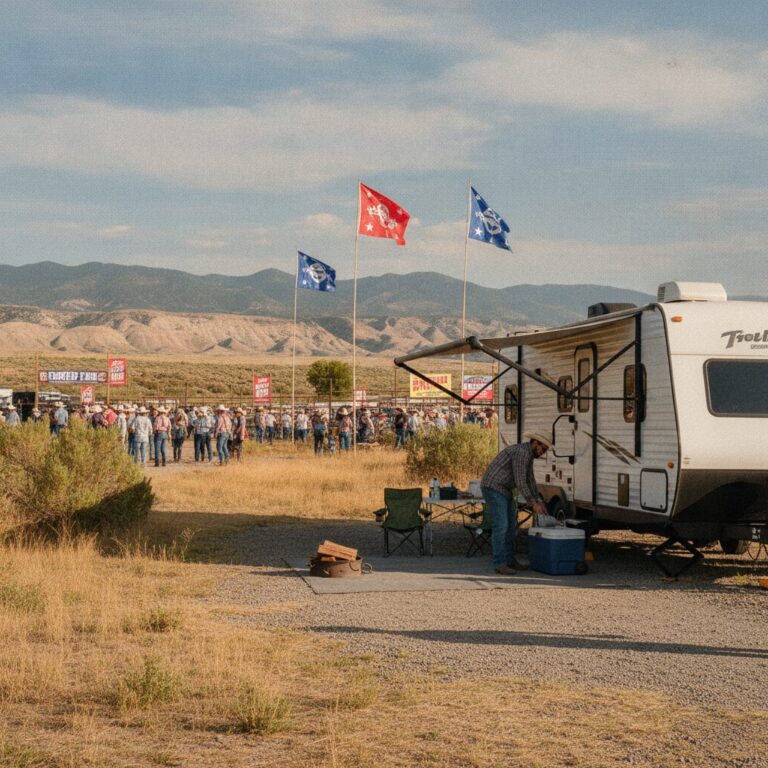
Ponderosa Campground and Gateway Campground in Cody proper are solid full-hookup options if you want to be closer to town for the Cody Nite Rodeo, the Buffalo Bill Center of the West, or a restaurant meal mid-trip. I’ve delivered to both many times. For renters who want a Yellowstone base but also plan to spend days exploring Cody itself, these make a lot of sense.
For those who want to push a little deeper into the forest before their Yellowstone days, Wapiti Campground and Eagle Creek Campground in Shoshone National Forest sit right along the North Fork Highway — meaning your morning drive to the East Entrance is even shorter. These are more rustic (dry camping, no hookups), so they’re a fit for renters comfortable with that style; just ask me and we’ll match the right rig.
When to Come: Seasons, Crowds, and What I See Every Year
Peak season in this market is genuinely June through August, and if you’re targeting Yellowstone specifically, July is the month I’d describe as “glorious chaos.” The park is stunning, the wildlife is active, the wildflowers in the Absarokas are at their best — and campgrounds here fill up. I’ve had renters call me in mid-June wanting a July 4th week setup, and I have to be straight with them: that’s the week I’m already booked solid, and so are the best campground sites. Book early. That’s not a sales pitch; that’s just how this market runs every single year.
September is my personal favorite month to send renters into Yellowstone. The elk rut is on — bull elk bugling in the Hayden Valley at dawn is something you don’t forget — the aspen stands in the Absarokas go gold almost overnight, and the crowds thin out dramatically after Labor Day. Temperatures in September can swing hard here: warm afternoons in the 60s, cold nights dropping to the 30s or even below freezing by late month. I make sure renters know to check the heating system in the rig before their first night, and I always walk through it at setup.
The East Entrance to Yellowstone typically closes for the winter — usually by early November — and doesn’t reopen until late May or early June depending on snowpack. Spring shoulder season (late May, early June) can be absolutely spectacular: low crowds, newborn bison calves, and the North Fork rushing hard with snowmelt. But I warn renters that late spring weather here is unpredictable. A warm day can flip to a snow squall at elevation. We’ve had May snowstorms that closed the North Fork temporarily. That’s Wyoming.
How Delivery and Setup Work for a Yellowstone Trip
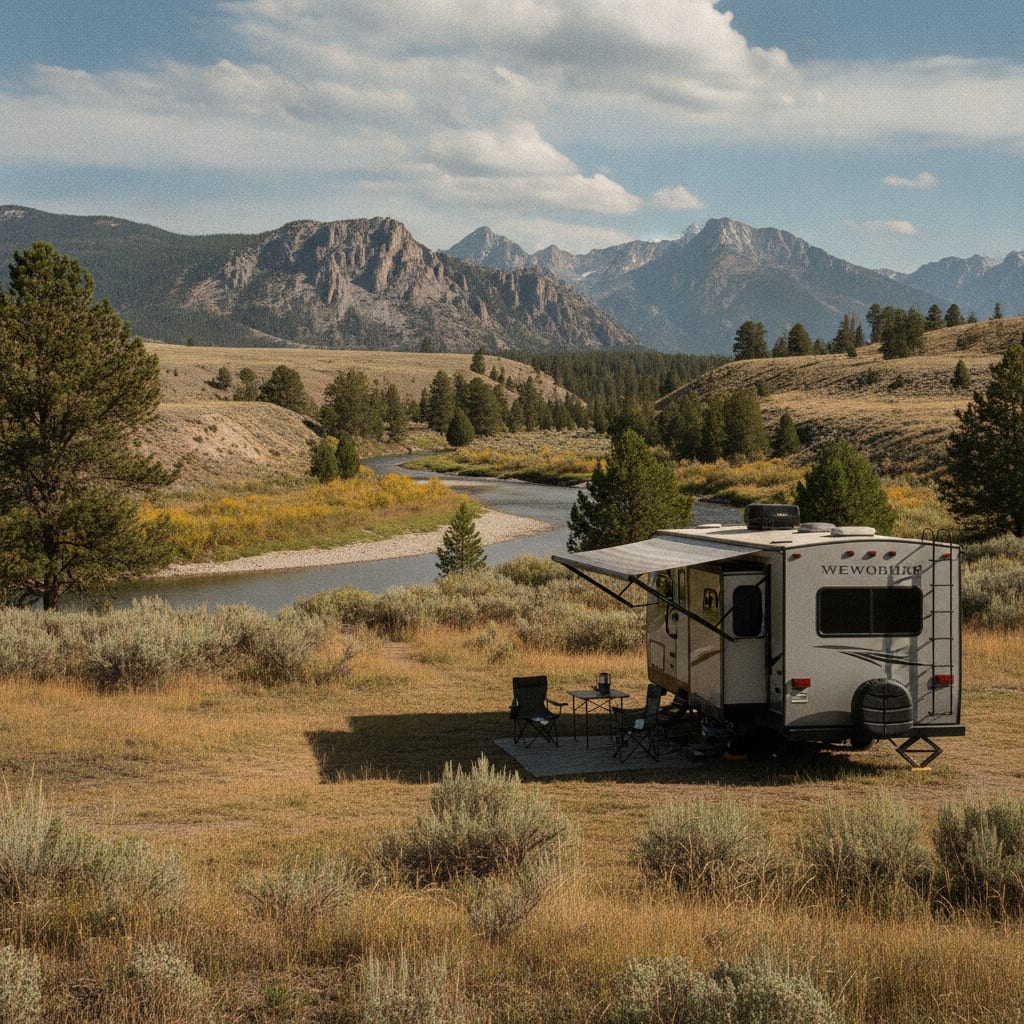
Here’s how I run every rental in this area, because I know the “how does this actually work” question is right behind “where do I stay.” You don’t pick up an RV from a lot and drive it somewhere unfamiliar. I bring the rig directly to your campground site, level it, connect the hookups, run through every system with you in person — water, heat, kitchen, everything — and make sure you’re comfortable before I leave. When your trip ends, I come back and break it down.
For Yellowstone-area trips, that usually means I’m delivering to a Cody-area campground the afternoon before your first park day, so you wake up to a ready rig and drive straight up the North Fork. There’s no fumbling with unfamiliar equipment at an entry gate, no stress about where to park a truck and trailer you’ve never towed before. You arrive at camp, you sleep, you drive into one of the most spectacular places on earth in the morning. That’s the whole idea.
For delivery logistics: I service Cody and the surrounding Big Horn Basin region — including campgrounds along the North Fork corridor, Buffalo Bill State Park, and sites in Shoshone National Forest. If you’re coming from Billings Logan International (BIL) or Yellowstone Regional Airport (COD) right here in Cody, I can coordinate timing around your arrival. Just tell me your flight details when you reach out and we’ll work backward from there.
What to Plan For: A Realistic Yellowstone Day-Trip Checklist
Based on how I see these trips actually unfold — and the calls I get from renters mid-trip — here’s what I’d make sure you have sorted before you head up:
- Buy your park pass in advance. The America the Beautiful annual pass is the right call if you’re spending multiple days at Yellowstone and plan any other park visits. The East Entrance gate line in July can be genuinely long; having your pass ready saves time.
- Get to the East Entrance early. Leaving Cody by 7 a.m. puts you into the Hayden Valley before the midday crowds. Wildlife is most active in the first two hours of daylight.
- Fuel up in Cody before you go. Gas inside Yellowstone is available but pricier, and the North Fork corridor has limited options once you’re past Cody.
- Cell service drops significantly past the reservoir. Download the NPS Yellowstone app offline maps before you leave camp. Let someone know your general plan for the day.
- Check road and weather conditions the night before. Yellowstone road alerts are posted at nps.gov/yell — a storm can close a road quickly, especially at elevation in shoulder seasons. I’ve seen June snowstorms shut the Sylvan Pass section of the East Entrance road temporarily.
- Pack for variable weather in the rig’s fridge, not just a cooler. That’s one of the real advantages of a properly set-up RV base — cold drinks, real food, a place to warm up if afternoon storms roll in. Use it.
- Plan your sewer and water before a multi-day stay. I’ll walk you through the campground’s hookup situation at setup, but know that full-hookup sites in Cody make this entirely hands-off.
Beyond Yellowstone: What Else I’d Send You To While You’re Based in Cody
Renters who base in Cody for a Yellowstone trip almost always end up with a day or two they hadn’t fully planned, and I always have suggestions ready. The Chief Joseph Scenic Highway (US-14A) is one — it’s a genuine alternative loop that peels north from Cody, climbs up through dramatic high-country terrain, and connects to the Northeast Entrance of Yellowstone through Cooke City. I wouldn’t recommend driving a large trailer on that road (it’s steep and winding in sections), but in a tow vehicle or Class C it’s outstanding, and the views into the Sunlight Basin are the kind that stop people mid-sentence.
The Cody Nite Rodeo runs every summer night from June through August — it’s genuinely one of the longest-running nightly rodeos in the country, and it’s right in town. After a long day in the park, walking into that arena with the kids is the kind of evening that makes a trip. The Buffalo Bill Center of the West is world-class and worth a full day if you have rain or want a cultural anchor to the trip. And if anyone in your group is into geology or paleontology, the Wyoming Dinosaur Center in Thermopolis (about 80 miles south on WY-120) is the real thing — not a tourist trap.
Ready to start planning? Call me directly at 307-222-8547 or email [email protected] and I’ll help you match the right rig to your group size and the campground that fits your trip best. You can also browse the fleet to see what I currently have available for the Big Horn Basin area, and check out our full guide to campgrounds and RV parks near Cody for detailed information on every site I deliver to regularly. Yellowstone is worth doing right — let’s get you set up properly.